Thursday, February 22, 2007

ARGGHH! The Gospel According to Matthew..."Colorized Version"?


Someone tell me this is a hoax. "Genius Products", who appear to be part of the Weinstein Company are about to release Pasolini's classic Il Vangelo Secondo Matteo...in colour. It's due to be released on the 26th March, and whilst it's skinny on the extras it does included the black and white version of the film as well.

I have to admit I'm lost for words. Pasolini is probably spinning in his grave. The use of black and white was a deliberate choice by Pasolini; it was part of his aesthetic. Review after review of this film comments on the grainy black and white film stock, the impressive use of chiaroscuro.

"But hey black and white is boring. Why don't we jazz it up with some colour?". Part of me is curious to see this, but only in the same way that people can't help looking on when they drive past the site of a car crash.

The worst thing is that another release of this film on DVD means that it has further shrunk the potential market for a decent, Criterion-esque release of this film which includes the option to remove the subtitles, as well as his related films La Ricotta and Seeking Locations in Palestine for The Gospel According to St. Matthew.

Meanwhile my podcast on Il Vangelo Secondo Matteo is still available to download.

Wednesday, February 21, 2007

Living Bible - Episodes 7 & 8 (UK version)


(This post is part of a continuing series on the UK release of The Living Bible - See all posts and citation method)
Episode 7 - Woman at the Well
John hands on to Jesus - (John 3:22-31)
Pharisees hear about Jesus - (John 4:1-3)
[extra-biblical episode]
Woman at the Well - (John 4:4-42)

Episode 8 - Jesus Before the High Priest
Jesus is taken away - (John 18:12-15a)
Trial before Annas - (John 18:19-24)
Peter's first denial - (John 18:15-17)
Testimonies against Jesus - (Mark 14:55-56)
Peter's second denial - (John 18:18, 25)
Trial before Caiaphas - (Mark 14:57-65)
Peter's third denial - (John 18:26-27)
Another Trial before Caiaphas - (Luke 22:66-23:1)
Quote from Isaiah - (Is 53:3-5)
Notes
Aside from some of the early silent films, the incident with the woman at the well is fairly rare for Jesus films. Obviously Saville's The Gospel of John had to include the incident, but otherwise the only major films to cover this incident are Rossellini's Il Messia and this series' contemporary . As with The Gospel of John the whole episode is included, although not quite word for word, hence not only is this incident included, but it's also given prominence.

This version of that story though is very keen to stress the woman's sin in her five marriages. Whilst that corresponds to the 20h century understanding of the situation, the woman should almost certainly be seen as a victim. Marriage was rarely by choice for women, and a displeased husband could get a divorce with relative ease. The repeated divorce cycle suggests perhaps that she was unable to have children. The fact that she was drawing her water in the noonday sun, rather than in the cool of the morning suggests she had also been rejected by society.

Episode 8 struggles to bring together the four gospel accounts of the trial before Caiaphas into a harmonious whole. The task is made harder by the degree of confusion in John as to who is High Priest. The title is given to both Annas and Caiaphas (I believe that the title was held for life, even after the person was no longer in office). Details are given of the hearing before Annas, but not before Caiaphas. The four accounts can be seen in parallel at Five Gospel Parallels.

But the film further complicates the hearing in front of Caiaphas, by trying to mesh Luke's marginally more divergent account with those of Matthew and Mark. Whilst in Mark and Matthew it appears to occur at night, Luke stresses that it happens by day, and the film picks up on how a night trial would have been unlawful. Luke also includes a little less detail overall, but adds Jesus saying "If I tell you, you will not believe; and if I question you, you will not answer".

So the film decides to handle these as a main trial by night, and an official hearing in the morning to ratify the night council's decision. Whilst there are discrepancies between Luke and Matt/Mark, this seems a fairly poor way to solve them as both accounts contain enough common ground for it to be clear that these trials were one and the same.

The episode ends on the famous verses from Isaiah 53:3-5. I've previously noted that whilst the passage is quoted 7 times in the New Testament, the parts that support substitutionary atonement are curiously absent.

Tuesday, February 20, 2007

More on a New David Film

Early last month I linked to news that J. Michael Straczynski was writing a film about David. Peter Chattaway thinks he has heard about this film from another source, producer Ralph Winter. Winter is interviewed by Infuze Magazine and drops in this little piece of information
I've read a couple of scripts lately based on Old Testament stories. One of them is about David, and his rise from a shepherd to becoming the anointed king. And it's gritty. It's brutal. It's reflective of the time. And it's not written by a Christian. But it's a compelling story, and that's the kind of movie I want to make!
As Peter notes, that sounds very similar to Straczynski's script, the safe bet would be that this is the same film.

Certainly I'm encouraged by these two soundbites. The story of David is grizzly, and the biblical writers almost seems to revel in the little details here and there like Philistine foreskins and people getting caught by their hair in trees and so on.

Winter also makes some comments about The Nativity:
...it's a straight-ahead retelling of the story, and there's a lack of mystery to it. I think they toned down some of the violence, afraid that some Christians would be turned off by it...Ultimately, it's just not transcendent enough to inspire me. My wife liked it more than I did. And I hope to see it again, so maybe I'll feel differently. It's got all the right production values, but it doesn't have that mysterious missing element that takes it to another level.

Monday, February 19, 2007

Interview with Lance Tracy

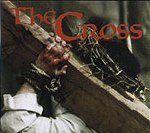
I reviewed Lance Tracy's The Cross a couple of weeks ago, and I managed to get the following interview with the director.
===========
Matt Page:Are you familiar with the Life of Mohammed film "The Message"? How did that influence what you did here?

Lance Tracy:No I’m not familiar with the film.

MP:The flashback-triggering-memory technique you used several times in the film also got used later on by another Jesus film that people might of heard of. Did you hear from Gibson’s people or do you think it was just coincidence?

LT:Funny story here. While Mel Gibson’s The Passion of The Christ was in development, Mel’s producing partner, Bruce Davey went to breakfast with my producer, Roger Lamb. Roger wanted to discuss a feature length version of The Cross. Little did Roger know that Bruce and Mel were in development on The Passion of The Christ. We had just finished The Cross so Roger gave Bruce a copy of the film. A year or so later (as memory serves me) when the Passion of the Christ came out, I was sitting in the movie theatre watching it with my wife. Mel’s crucifixion scene was almost identical to The Cross. There was a similar crane shot starting at the head of Jesus and raising straight up to the sky. Simultaneously, in both films you could hear the heart beat of Jesus fade up and then slowly come to a stop—a device I used to let the viewers know that this is exactly when Christ’s heart stopped. Mel added a CGI "tear" from God at that moment, which was effective, and his budget accommodated it. My wife looked at me at this scene in shock—I knew her look; "This is exactly like your film". If you compare the resurrection scene in Jesus’ tomb, you’ll notice the same thing. There are other shots as well. The Cross was finished at least a year before The Passion of The Christ, so any inspiration on our film certainly didn’t come from it. The next day after the release of Passion, I received a bunch of phone calls from viewers around the country noting the similarities and asking how I felt. They were implying that I should be upset. I told them that if Mel was indeed inspired by The Cross then I was flattered. I consider him a great filmmaker. Admittedly, all filmmakers are inspired by ideas from other filmmakers.

MP:Talking of The Passion of The Christ, there was obviously a lot of controversy surrounding that film. If you were re-making this film what would you do differently?

LT:Good question. I would spend more money, shoot it in Morocco and use actual middle-eastern people / actors in the film. Also, while the "viewing the movie through the eyes of Jesus" was unique and interesting, and worked well for this short film, I don’t think I’d do it again on a feature - at least to that extent. While it eliminated controversy over what Jesus probably looked like, I believe it would be difficult to develop his character the way it would need to be developed in a feature.

I wanted a hero that relates to every man, someone who is willing to die for the cause. Obviously Jesus did that. While that makes great gospel, that also makes a great story. Unfortunately, it is difficult to put our sometimes cinematically-cumbersome religious beliefs and viewpoints aside to take the artistic license to tell the best story. I felt like both The Passion and The Cross had some of those cumbersome moments--A checklist, if you will, of items that must appear in a Jesus film in a certain way, in order for it to be told correctly. You don’t find those same constraints in a non-religious historical film. There are expectations to contend with, and a Christian audience goes into a film like this with their own set of them.

My feature script is called Revolution and I’d like it to relate on many levels to a non-Christian audience—mainly because I don’t think our world should be compartmentalized between "religious" and "non religious". However I don’t feel the market can accommodate another Jesus film right now.

MP:Most filmmakers have tried to minimise the line from Matt 27:25 due to the way it has been used to justify anti-Semitism over the ages. What were your reasons for portraying it the way you did?

LT:Jesus and the gospel are not politically correct, from my viewpoint. That’s why he died. I don’t think if he came back today and preached the same way, things would be different. If I’m going to tell an honest story about Jesus, there will be inherent moments that will seem anti-Semitic. Taken into context, those Jewish Pharisees happened to be on the receiving end of his strong words, but I think he would have said those same things to anyone, if they stood in the way of his mission and message. It wasn’t because they were Jewish, it was because they happened to be Jewish Leaders who were leading both Jews and Gentiles astray. In Matthew 10:34, Jesus states, "Do not suppose that I have come to bring peace to the earth. I did not come to bring peace, but a sword." Now, he said a lot of things in his days, and I think it’s important to not get hung up on just one thing, but to consider the balance of ALL he said, and the message he was trying to portray. That’s what we tried to present in The Cross —a balanced view of his message.

MP:One of my favourite shots from the film is the one of Judas jumping off the tree. It’s a very unusual camera position. What were you trying to capture with that shot?

LT:There’s a certain level of gore in this film which I believe must be there, in order to tell the story truthfully. I decided to place the camera under Judas and have him fall toward camera upside down in the frame. I felt it was jarring and confusing, as I imagine a hanging would be. Agustin Rodriguez, the actor, did a fine job.

MP:Have you any plans to revisit this material at all? There was some discussion on the DVD about a longer film using the same basic premise?

LT:As I eluded to above, my long-term goal as a director is to make an epic film of his entire life, in the calibre of Gladiator or Lawrence of Arabia. The market is a bit swamped at the moment, and I’d like a few more features to contend with first. My current feature documentary on the effects of the Adult Entertainment industry called Adult Entertainment: Disrobing an American Idol is being released next month: www.adultdocumentary.com. My next project is an American Civil War story with quite a twist, scheduled to lens this summer in Oregon State, USA

========

Thanks to Lance for his answers.

I find Lance's first couple of answers astonishing, particularly as there seems no good reason to doubt their veracity. With regards to The Passion of The Christ it was clearly released three years after The Cross, and the similarities are obvious. What I find astonishing is that in the mountains of reviews, essays, papers, comment and discussion I've waded through on The Passion no-one has yet mentioned The Cross so directly.

I'm also really surprised no-one has ever mentioned The Message to Lance either before, during or after the film's release. I have yet to see it so I can't comment on any similarities or differences, but I would have thought that someone, somewhere, would have brought it up in conversation at least once. Mind you, it's not a particularly well known film especially for those who don't have a strong interest in Islam

The Cross is available to buy on DVD, as well as to download

Friday, February 16, 2007

RoGoPaG Coming to DVD

I've been meaning to catch RoGoPaG ever since my friend Peter Chattaway reviewed it a while ago. It's actually a collection of four short films and it takes its name from Robert Rossellini, Jean-Luc Godard, Pier Paolo Pasolini and Ugo Gregoretti who each directed one of the films.

The film that is of most relevance to this site is Pasolini's La Ricotta in which a movie director makes a film about Jesus's death. The film was deemed so irreverent that Pasolini was initially sentenced to some time in jail. Shortly afterwards he released the far more reverent Il Vangelo Secondo Matteo (1964).

La Ricotta, with out the other three sections I believe, has been available on DVD since 2004 when it was released as an extra on the Criterion Collection version of Pasolini's Mamma Roma. (The director character - played by Orson Welles - reads passages of Pasolini's book "Mamma Roma" during La Ricotta).

However, the entire anthology is to be included in a boxed set of Pasolini's films which is to be released on 26th February 2007. The set will also include Accattone and Comizi d'amore (Love Meetings). Sadly, Il Vangelo Secondo Matteo is not included in the set. I long for the day that film gets the full treatment and not only gets released with the option to remove the subtitles, but also with La Ricotta and Seeking Locations in Palestine for The Gospel According to St. Matthew (which Peter Chattaway also makes some comments on). This set is actually only volume 1. A second box set will be released on the 23rd April featuring Hawks and Sparrows (1966), Oedipus Rex (1967), and Pigsty (1969).

Thursday, February 15, 2007

The Essential Jesus

This isn't so much of a formal review as a few thoughts on Crossan's Book which I read over the autumn (fall) last year.

================

Unlike John Dominic Crossan's previous works "The Essential Jesus" is more of a popular level text, which claims to be "the definitive presentation of Jesus' authentic sayings and teachings". Essentially it's a compilation of what Crossan considers to be the earliest, and authentic, sayings of Jesus alongside some of the earliest examples of Christian art. There's a brief introduction, ("Contexts") before the main section which lays out each saying on a fresh page and intersperses it with images of this early art (largely sculptures on sepulchres). The final two sections contain notes on the images, and then an inventory of images.

Crossan's methodology is very controversial, and he his fair share of ardent admirers and vitriolic critics alike. In terms of the collection of sayings, the raw information displayed here is already present in "The Historical Jesus: A Revolutionary Biography", but by making this collection the core feature of this book, it brings Crossan's reformed gospel into clearer focus. The use of images also contributes to the clarity of image that Crossan lays before his readers.

One the points that I found most interesting is Crossan's theory that two characteristics typified Jesus's Kingdom program - eating and healing. To support this theory he not only relies on the historical texts but also the sheer number of the earliest Christian images which depict meals or healings. Out of 60 typical images, 27 are eating scenes, and 19 are healing scenes. Whilst I'm not convinced that art is any less subject to bias, ideology and removal if deemed offensive, it's certainly an interesting point. Certainly the artistic evidence supports the textual evidence on this point, and it's interesting that this aspect, and particularly it's political implications, tend to be underplayed today. I intend to follow this up at some stage with an examination of the frequency which these two features figure in Jesus biopics. Certainly the miracles are often underplayed. How will the meal scenes fair?

The other point which I found interesting was Crossan's skill in making familiar texts fresh once again. Crossan provides his own translation for each text, based on his own five point process. i - both individual and social, ii - both political and religious, iii - sayings require both interpretation and translation, iv - structural and spatial presentation to return to the original more memorable phrases, v - minimal and poetic, also to reflect the original easy-to-remember format. However, in places, the new translation seems less memorable than the standard canonical versions. Perhaps that simply reflects my own familiarity with these canonical version, but whilst overall Crossan achieves his objective, in places it seems to only make things less easy to remember.

What really breathes fresh life into these texts is the way he asks after certain sayings "but how is the Kingdom of God like that"? It's a incredibly simple question, but pretty soon I realised that in many places I had uncritically accepted the explanation I had been given years ago (at Sunday school probably), and had not really listened to those texts since. Whilst Crossan's "Mediterranean peasant" filter gives him a particular angle on these things, even those who reject the prominence Crossan gives it will find the question helps them look at things anew.

So overall it was an interesting and challenging read. I should be clear that I don't agree with all of Crossan's approach. In places it is overly pessimistic, in others it's more Mediterranean than Jewish. But even despite my misgivings he has a number of fascinating insights which make "The Essential Jesus" well worth a read.

Wednesday, February 14, 2007

Living Bible - Episodes 5 & 6 (UK version)

(This post is part of a continuing series on the UK release of The Living Bible -See all posts)

After the unusual episode arrangement in parts 3 and 4, the series fits back into a more recognisable chronology for the next two parts covering the following episodes (citation method)
Episode 5 - First Disciples
Jesus in the Wilderness - (Mark 1:13)
Jesus and John's disciples - (John 1:29-39)
Call of Simon Peter - (John 1:40-42)
Jesus Calls Philip - (John 1:43-44)
Jesus Calls Nathanael - (John 1:45-51)

Episode 6 - Jesus at Nazareth and Capernaum
Jesus in Jerusalem - (John 2:23)
Jesus in Galilee - (Mark 1:14-15)
Jesus Heals a Nobleman's Son - (John 4:46-54)
Rejection at Nazareth - (Luke 4:16-30, Mark 6:4)
Jesus goes to Capernaum - (Matt 4:13-16)
Notes
The harmonising approach used by the makers of this film runs into some difficulty in these episodes. Firstly, Jesus's contact with John the Baptist is markedly different in the fourth gospel compared to the other three. In John, Jesus is not baptised by his cousin. The Baptist simply points him out to his own followers, with the result that some of them instantly leave John to follow this new, and by implication greater, leader. John's gospel also omits the temptation in the desert.

To overcome this, Episode 5 starts with Jesus leaving the desert after his temptation, and it is then that John makes the famous announcement "Look, the Lamb of God". It also omits verses 31-32 of chapter 1 where John the Baptist repeats the words heard in the Synoptics immediately after Jesus emerges from the water.

It should also be noted that in the US DVD release these incidents are handled even more curiously. Firstly, the baptism is included, but John's hair and beard are different. Then the "Behold the Lamb of God" scene is shown, but it is totally different, being filmed in a different location with more extensive dialogue, with John looking the same as in the baptism scene (all US episode 2). Finally, the third episode opens showing this incident again, only this time it is the same as the UK version being discussed here.

These episodes also come up against some of the ways the Synoptics and John differ. Both the numbers of trips Jesus makes to Jerusalem (three in John, just one in the others) and the way the disciples are called varies between the four gospels. In Matthew, Mark and Luke, Jesus first calls Peter and Andrew as they are by the Sea, and then soon after calls James and John. In the fourth gospel, John the Baptist encourages Andrew and an unnamed disciple to follow Jesus, and Andrew introduces Peter. Shortly after the numbers are brought up to five when Philip and Nathanael join.

Here the series prefers John over the Synoptics. James remains absent, although the unamed disciple is here identified as John. Episode 6 then starts in Jerusalem with a reference to Jesus having just cleared the temple. He then returns to Cana and Galilee. The script does well here to harmonise the different accounts although it does omit the wedding at Cana.

The Living Bible also departs from the majority of Jesus films over the healing of the official's son. Most films tend to depict this based on either Matt 8:5-13, or Luke 7:1-10, with the "official" also being a centurion. This ties in with the Rome vs the Jews subplot of many Jesus biopics. Here, however, the Johannine version of the story is prefered whereby the official is a nobleman, and it is his son that is critically ill. Many would, of course, hold that these are two different, albeit similar, events, and indeed this film may prove to take that path as well. That said, the similarities are striking, and the differences fairly minor, and could be explainned away by the differing concerns of the authors.