Wednesday, May 10, 2006

Abraham (1994)

Abraham was the first film produced by Lorenzo Minoli, back in 1994, as part of what would become the Bible Collection. Eventually it led to 12 other films being made which were based on stories from the Old and New Testaments, as well as an additional 4 stories fictionalising the lives of those who were "close to Jesus".

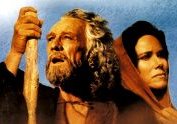
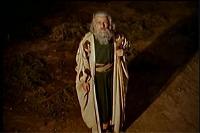
It was an auspicious start. Abraham has generally been neglected in film, with only a handful of portrayals over the 110 or so years the cinematic medium has been around. Director Joseph Sargent's (most well known for Jaws: The Revenge) acquisition of Richard Harris and Barbara Hershey (just five years after Last Temptation of Christ) to play his leads must have been a major triumph. Sargent himself shows far more ability here than in his dead-in-the-water shark flick, with interesting camera angles and use of light, most notably when the newly enlightened Abram tells his father (still in the dark) that he must leave (see below right).

There is some great work by a number of other members of the team on display here as well. The score, by Ennio Morricone (The Mission and numerous other films from the Bible Collection) subtly underpins much of what we see and hear. Raffaele Mertes shimmering cinematography makes the desert feel relentless and frustrating, such that there's a tangible sense of release whenever Abraham's people find water and food.

As a group of films, the Bible Collection had three major strengths. Firstly, they tried to stress the historical context around the stories. This is somewhat unevenly achieved here, the opening scenes which include Lot's wife giving birth, covenants being broken and made, and the huge cohort that follow Abram around, certainly flesh out some of the background to this narrative. The film nicely captures the nothingness of Abram's life before God. His god was simply unknown to people prior to his call to Abram in Genesis 12.

That said, as the film progresses the histoircal strengths of the film seems to fade a little. For example, there is indication that Abraham lived in a culture where child sacrifice was not uncommon. This certainly changes the impact of the text somewhat, which never indicates an angsty reluctance on Abraham's part. Removing the story from this context, and portraying Abraham as a proto-21st century father is, of course, very common, but it politicises the text into form easily manipulated by preachers. "Do you love God enough to sacrifice the things you hold most dear"? It's an important question of course, but the story can be read in other ways.

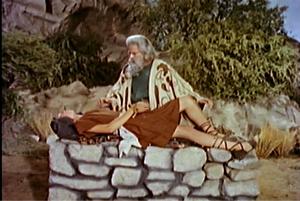
Secondly, they have tried to include episodes that many bible films gloss over. Here, for example, Abraham does lie to the King of Egypt, even though here the story is spun to show that Abram needed to do this in order to save his starving, thirsty people. We also meet Melchizedek (below right), priest and king of Salem. It's important that such episodes are included in these stories, and script writer Robert McKee has worked hard to maintain the audience's empathy with Abraham, postulating plausible back stories to justify Abraham's actions.

Finally the Bible Collection films have tried to flesh out the characters involved in the stories, using a combination of extra-biblical historical sources, speculation, and good old imagination. Sometimes this has not been so successful, but here, for example, the way that the background figure of Eliezer of Damascus (Genesis 15:2) is brought into the story in such a way to explain his otherwise mysterious biblical credit is intriguing. The closing line, about Ishmael and Isaac (that "on his tomb they joined hands") seemingly based on a line in Josephus.

The relationship between Hagar and Sarai (and later Abraham) is also interestingly developed, although Hagar is painted badly so it's easy not to sympathise with her when Abraham sends her and Ishmael away. Overall the film meanders it's way through the first half of the film, taking time to explore, and familiarise itself with, its characters before putting them under the microscope of the events that occurred to them.

Arguably the most memorable passage from the various stories of Abraham and Lot is his aborted attempt to sacrifice Isaac. This forms the pinnacle of this film that the rest of it builds towards. Whereas Genesis continues to look at how Abraham arranges Isaac's marriage, buries Sarah, and marries Keturah, this film climaxes with God's timely intervention. The narrative has flowed surely but steadily towards such a climax. Abraham and Sarah's desperation for a son through the first three-quarters of the film is unrelenting. Several of the transitions between the various episodes show Abraham alone, burning various sacrifices to his god. On one occasion we even see Abraham teaching Ishmael about sacrifice in a way that hauntingly pre-figures Abraham's near sacrifice of that held most dear to him.

Perhaps the weakest are of the film are the battle scenes, which feel a little drawn out, and disrupt the rhythm of the film. Whilst the film pre-dates Braveheart and the revival of the epic film, and so cannot be called for being yet another copycat job, it still seems to lack the necessary tension to make them interesting. These scenes never seem to carry any sense of danger.

Overall though, Abraham is a worthy telling of the life of the father of the three great monotheistic faiths, finding both strength and weakness in it's lead character, and providing much of the context that surrounded him.

Tuesday, May 9, 2006

Bollywood Jesus

This Easter, I was surprised when watching Channel 4's The Passion: Films, Faith & Fury that they covered one Jesus film I had never heard of. Dayasagar, also known as Daya Sagar, Oceans of Mercy, Karunamoorthy, Karunamayudu and no doubt a number of other titles was made in 1978/1985 using Hindi actors and crew. Unfortunately, I've very little knowledge of the Indian Film Industry in general (other than the fact it's the second biggest film industry in the world), and the distinctives of Bollywood specifically.

Anyway, I finally got hold of a copy in the post, and hope to watch it soon, and offer some thoughts here. However, there are a few articles around to read about the film which, thus far, has mainly been used for evangelism, (almost entirely inside India). The film is distributed in India by Dayspring International and they have a couple of articles on the film, including a "documentary" which features a couple of clips from the film. There's also a useful article at Christianity Today , and it has it's own website of sorts

I've already had a few people contacting me to ask if I know where you can buy a DVD. There are one or two places, most notably indiaplaza.com. There's also an IMDb page which has very little information at the moment other than the filming locations which included Calcutta and Mumbai. There's also a few notes on the film at expressindia.com (under the heading "God Speed") including the following.
Produced by Radha Chitra, in collaboration with Amruthrani Communications and Day Spring and CBN (USA), it's directed by Dr Vijaya Chander who also plays Christ. Earlier, he had also done a Telugu film on Christ called Karunamayudu in 1978...Dharmesh Tiwari, Suresh Chatural, Girija Shankar, Sana, Ashwini Kalsikar play key roles in this epic which is also being dubbed in Tamil, Malayalam and Telugu.
Finally, there will be a paper given on the film at the Fifth International Conference on Media, Religion, and Culture by Dwight Friesen called "Karunamayudu: A Vision of Jesus in Indian Cinema".

Monday, May 8, 2006

A Few Thoughts on Abraham

I watched the Bible Collection's Abraham (1994) last night and had planned to get some more formal comments up this morning. Sadly, a plumbing related disaster this morning has robbed me of the necessary time this morning, so I'll have to return to that another day. Meanwhile, I thought I'd just offer a few comments on the actual story of Abr(ah)am indirectly prompted by the film.

Firstly, the most famous incident in Abraham's life is his aborted sacrifice of Isaac. In thinking about this film over the weekend I can't help wondering what Sarah's knowledge of the situation was. Did Abraham tell her before what he was planning? Did she give her consent? Did either Isaac or Abraham tell her afterwards. For some reason my mind wandered onto an image of Terry Jones playing Sarah hearing an account from Abraham of the events of the afternoon. "You were going to do what?!!? 60 years it took me...".*

On a more serious note, the more I consider this story, the more it only makes sense within a context where child sacrifice is common. This is subtly hinted at in Genesis 19 where Lot is all too willing to metaphorically sacrifice his daughters in order to preserve the dignity of his angelic gifts. Sadly this was one area of weakness for this film, which I'll go into more later on. Personally, I find Girard's insights into this story fascinating as the moment that God breaks through the universally accepted practice of child sacrifice, and shows it is not the way to please him. This God is different. I don't know how wholly convincing I find the argument, but it certainly sheds fresh light on the story.


*In a similar vein I also pictured God saying to Abraham, "Dude, I was like totally joking. Man, you'll believe anything".

Friday, May 5, 2006

Script Review for The Nativity

I'm not sure who got it first, but both Jeffrey Overstreet and Peter T Chattaway have the news that IGN FilmForce has a review of the script for Catherine Hardwicke's film Nativity .

It's worth reading FilmForce's article in full, so I'll not cut and paste lots of quotes from it here, but there were a couple of things I was pleased to read. Firstly,
First, her father arranges for her betrothal to an older, shy carpenter named Joseph. In accordance with Hebrew law, Mary is now Joseph's wife in all ways except for that which leads to family (they must wait another year).
The article also notes how Mary "hardly knows" Joseph at the point of their betrothal. It very interesting that the film is going to give a lot of the historical context that is usually missed out from movie versions of the nativity story. Mary and Joseph's was most likely an arranged marriage and it's good to see a film reflect that. Not only that but the ceremony, and the precise meaning of betrothal is noticeably different from how marriage takes place in today's western world. It will be interesting to see the reaction of the townspeople to Mary's pregnancy. Will they assume that Joseph is the father or someone else? It's also nice to see Joseph described as "a blue collar laborer" (although one assumes not literally - after all this is not Goddard's Hail Mary). However, I'm not sure whether this is screen writer Mike Rich's wording, or whether the phrase belongs to FilmForce's Stax.

Secondly, we already knew that this film was going to depict a young Mary because Whale Rider's Keisha Castle-Hughes has been chosen to play Mary. FilmForce specifies that Mary is only "a fifteen-year-old" at the time of the story.

On the downside it appears that we're still going to get the traditional three wise men, (who are named Melchior, Gaspar and Balthasar as well). I'd have really liked to see something different done with this part of the text. Still, Stax notes that their ""mission" is also followed throughout the story", so perhaps we will at least see them portrayed as magi-astrologers, rather than the more usual beard-stroking ponders of other Jesus films.

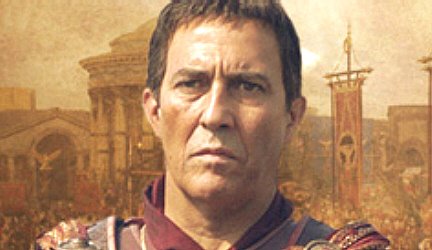
Finally a word on casting. In addition to Castle-Hughes, it's been confirmed that Shohreh Aghdashloo (House of Sand and Fog) and Shaun Toub (Crash) will play Mary's mother and father Anna and Joaquim. Jeffrey Overstreet also noted last month that "Ciaran Hinds will play King Herod and Oscar Isaac will play Joseph".

All in all thought this project is still sounding exciting. FilmForce notes that the "details about life in Judea under his rule added an extra dimension to Nativity", and the few pieces of information I've read have, on the whole, made me excited about how this film will turn out.

Wednesday, May 3, 2006

Abraham: Man of Faith

Abraham: Man of Faith is the first biblical story from the Living Bible Collection which was started in 1952 with a 12 half hour episodes about the life of Christ before going back to the beginning of the Old Testament and starting from there in 1958. I have previously reviewed two other entries from the Hebrew Bible; Gideon: The Liberator and Ruth: A Faithful Woman. As far as I'm aware this was only the second ever filmed version of this story after 1911's Le Sacrifice d'Abraham.

It's interesting that this is the first story from the bible that the series covers. Both the stories of Adam and Eve, and of Noah and the flood have proven popular with biblical film-makers, and the pre-cinema storytellers long before them. Two possibilities suggest themselves for this discrepancy; Either, the stories were considered historically rigorous enough (and it seems unlikely that this would be the reason), or, the budget was too small to film Noah, a flood and an ark, and the film-makers couldn't think of a way to film the Adam and Eve story "decently".

The film itself is very conservative, much like the other entries in the series, and this is highlighted in three ways. Firstly, there is very little added to the story - just the standard "Living Bible" introduction, and the occasional explanatory note. Secondly, there is very little deliberate interpretation or exploration of the text, the sub-text, deeper meanings, or alternative readings of the text. Secondly the biblical episodes which have been chosen for this film are those which highlight Abraham's strengths. Those which demonstrate his weaknesses have been excluded. Consider the scene guide below:
God calls Abram to leave his father (Gen 12:1-5)
Abram's sacrifice at Bethel (Gen 12:8-9)
Abram and Lot separate (Gen 13:7-12)
God promises Abram a son (Gen 13:14-17)
God promises a son again (Gen 15:5)
Visit of the three angels (Gen 18:1-15)
Birth of Isaac (Gen 21:1-3)
God tests Abraham (Gen 22:1-13)
God's promise to bless Abraham (Gen 21:16-18)

Note the episodes that are absent - Both occasions were Abram lies about his relationship with Sarah in Egypt, Abram's relationship with Hagar, and the sending away of her and Ishmael, and Abraham bargaining with God over the fate of Sodom. In other words every episode that makes Abraham look bad is excluded, all the stories which portray him in a positive light are included.

Perhaps the most striking example of this depiction glossing over the stories in the bible comes with the attempted sacrifice of Isaac. Isaac is the real hero here calmly accepting his fathers desire to kill him, and passively accepting his fate. There is no attempt either to show Isaac's fear (although admittedly none is reported), nor to put Abraham's actions in a context where child sacrifice is hardly out of the ordinary. Hence any Girardian notion of this act being a new revelation of the type of God Abraham was following is lost.

Finally, the production values are particularly poor in this film. The opening scene, of Abram making a sacrifice seems to be using the very same set that became Gideon's threshing floor. The acting is uniformly terrible, most notably the angel who's utterance of "Yes, you did laugh" couldn't be any more wooden if he had tried. That said there is a nice "God shot" on one of the occasions where Abraham hears God's voice (see above)

It's a shame that the first talking film about Abraham was so poorly executed, as it is truly one of the more interesting and fleshed out characters in the whole Old Testament. Thankfully eight years later the story would get a more thorough treatment as one of the stories in The Bible: In the Beginning, and later as part of the Bible Collection's Abraham (1994)

Exodus Decoded

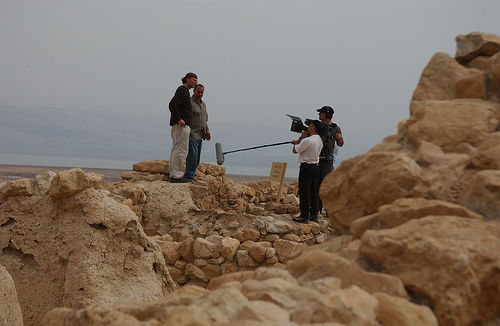
I've only just become aware of this documentary which apparently was aired on The Discovery Channel on Easter day (16th April 2006). It was produced and directed by Simcha Jacobovici, perhaps best known for his documentary James the Brother of Jesus from 2002. The biggest name associated with the project, however, was James Cameron (Titanic) who narrated.

Anyone familiar with the James documentary probably won't find it too difficult to contain there anticipation over this one. The James Ossuary later turned out to be a forgery. Whilst the theories that Exodus Decoded explores have not been forged the film's publicity goes a little too far when it suggests that it "solves the mystery of the events of the Biblical Exodus for the first time ever". Scientific theories about the cause of the Exodus have been around for so long that even Cecil B. DeMille tries to discredit them in The Ten Commandments (1956) by putting them on the lips of the soon-to-be-proved-wrong, arch-sceptic, Ramsees. Those are different theories from the ones explored by Exodus Decoded, which links the events of the Exodus to the mega-eruption of the Santorini volcano in Greece c.1600 BCE.

Nevertheless they are hardly original to this documentary. The BBC documentary Moses explored similar territory in 2002. It tried to explain all the phenomenon related to the Exodus on the basis of the Santorini, including the parting of the Red Sea which happened well after the plagues. Chronologically this wouldn't work as the Red Sea parting was said to be as an almost instantaneous and direct result of the explosion, whereas the plagues would have resulted from the delayed side effects og such a blast. It's unclear from the official website whether Exodus Decoded will go to that extreme. There's a useful summary at Wikipedia which suggests it doesn't go as far as Moses, and considers a wider range of evidence. My other criticism of that Programme was that it also only interpreted the text along traditional lines. Many would consider that as the text actually only talks about Yam Suph - the sea of reeds - that some of this conjecturing is looking for answers to questions that have been proved irrelevant.

Anyway, much of this post has been conjecture only. It's not a considered opinion based on an actual viewing of the film. Hopefully I'll see it soon and be able to give a more informed view.

Tuesday, May 2, 2006

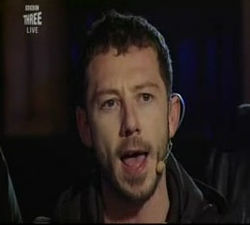
The Manchester Passion

Jesus has been seen quite a bit Manchester over the last few years. Three years ago ITV broadcast Second Coming, starring Christopher Ecclestone as a bloke who works in a Salford video shop owner who realises he is the Son of God returned to Earth. This Easter the BBC went one better and put on the Manchester Passion.

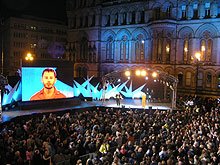
Describing the Manchester Passion is not as easy as it sounds. Culturally, its nearest reference point is the film of Jesus Christ Superstar (1973). However, instead of using songs specifically written to refer to Jesus, it has taken a number of recent pop/rock songs from the region, which have some link to the story of Jesus, and inserted them into a passion play. Furthermore, instead of locating the story halfway between ancient Judea and 70s America, the events take place in the centre of modern-day Manchester. Did I mention that , it's performed live in front of a crowd of tens of thousands, and includes a sort of walk of witness type procession through the streets of the city centre? Or that occasionally the drama is interrupted for some "on the street" interviews with some of those taking part in the procession?

As always the reaction to the BBC's announcement of this programme was mixed. Some felt it trivialised the gospel and that songs such as "Wonderwall" were totally inappropriate for a re-enactment of such a precious story. Others felt it was an incredible opportunity to bring the story of Jesus back to the streets, and backed it accordingly. Personally I always like to reserve judgment on such issues until I have had the chance to witness them for myself.

What was immediately apparent from watching just the opening few minutes was what a huge event it was. From the opening high shots of the event I would estimate that around 50,000 people attended the free event.1 Certainly BARB reports that over half a million watched it live on BBC3, and Ekklesia claim that 600,000 watched the late night repeat on BBC2.

Some of the criticisms of the programme have overlooked the logistical difficulties associated with such a project. So whilst some of the singing was out of tune, the same phenomenon can be witnessed every year watching the TV highlights of people performing their own songs at Glastonbury. The theological explanation for the action that was unfolding was perhaps not as refined as one might desire, but given that a sizeable percentage of the audience, (both at home and particularly in Albert Square, Manchester itself) will have been utterly unfamiliar with the passion narratives this point should surely be overlooked. Certainly the Bishop of Manchester, Nigel McCUllogh, claimed that the Easter Sunday service was "standing room only...the largest congregation I have ever seen".

What then of the content of the play. The table below lists the action taking place, the songs sung during it (with the original artists in brackets).

Triumphal Entry

You're Gonna Need Someone On Your Side (Morrissey)


Cast No Shadow (Oasis)

Last Supper

Love Will Tear Us Apart (Joy Division)

Virgin Mary sings to Jesus

Search For The Hero (M People)

News & Interviews


Judas Ponders his Betrayal&

Heaven Knows I'm Miserable Now (The Smiths)

Gethsemane

Sit Down (James)

Reprise

Search For The Hero (M People)

Arrest

Blue Monday (New Order) 

Peter's Denial

I Am The Resurrection (The Stone Roses)

Mary Solo

Angels (Robbie Williams)

News and Interviews


Pilate Trial

Wonderwall (Oasis) 

Details of Crucifixion

(Keith Allen)

Mary at the Cross

Sunshine After The Rain (Elkie Brooks)

Resurrection

I Am The Resurrection - reprise (Stone Roses)

Close

Angels - reprise (Robbie Williams)

One of the most frequent ways that the production has been criticised has been citing individual lines from the lyrics of the songs as inappropriate. This, I think, is to miss the point. Whilst there are a number of marked similarities to Jesus Christ Superstar (even the acting looking similar at one point), the songs are not meant to act as perfect summations of each scenario.

There are two ways to look at this. As someone who has essentially grown up with these songs, I have never really considered what the majority of these songs are actually about, or known all the lyrics. Instead they conjure up an array of feelings, emotions and memories which, in turn, shed light on the emotions surrounding the passion narratives, as well as linking those stories to those songs in the viewers consciousness. Music has an evocative power, and simply hearing particular songs years later brings back memories such as James' "Sit Down" causing dance-floor havoc as many of those present foolishly accepted their invitation literally. For many, particularly those present on the night, this process will also be reversed, and next time they hear one of these songs there minds will flip back to that night in Manchester City Centre.

To borrow a phrase from Kreitzer, in a way this production "reverses the hermeneutical flow"2 from the original narrative to the songs of the last few decades. Often imagery or concepts from the bible have been used to express more mundane emotions or situations,which may or may not have derived from some artists' messiah complexes. What Manchester Passion does is to turn that process on its head and put the derivative works alongside the originals to bring out new glimpses into well known tunes / stories.

Visually, this re-telling has many advantages. For British viewers the film's contemporisation of the story is far more personal than even some of the more recent attempts to relocate the story in the modern world. Whilst picturing the story in 70's New York (Godspell), or 80's Montreal (Jesus of Montreal) or more contemporary New York (Hero!) brings things home to a certain extent, seeing British riot police tussle with Jesus's British followers, whilst bundling the man himself into a British police van, all within the heart of a very British city, is far more visceral.

There are a number of nice modernising touches as well. Judas's betrayal is signified by him taking a call on a mobile phone. When Jesus buys the food for the last supper from a street vendor, the man has to put down his copy of the "Da Vinci Code". Instead of a cock crowing we have a blast from a siren.

There's also quite an emphasis on the cross as an instrument of torture, even presenter Keith Allen taking time to explain the methodology for those not in the know, strangely reminiscent of an over pushy evangelist. There are a few places where the programme comments on contemporary situations as well. Jesus, we are told, was arrested for a combination of inciting religious hatred and indirectly promoting terrorism. He is brought in wearing Guantanamo Bay style orange overalls.

It's always interesting analysing the parts of the passion narratives that are included and excluded by passion plays, particularly with reference to anti-Semitism. It is noticeable that the religious leaders were entirely absent from this production. Jesus is arrested by the police, and tried by Pilate. In a similar vein, whilst it is the (large) crowd that condemns him, they do not accept that his blood is on them and their children.

Perhaps one of the more interesting features of the script is where Keith Allen explains that whilst we'd all like to think that we are like Jesus, we are really much more like Pilate, flawed and compromised. We hear so often that people are basically good, and that it's important to "be yourself" that Allen's words are unusually bold and prophetic. Sadly they are hurried, and drowned out by the hoopla of a giant cross making its way to the main stage.

Sadly, from that point on, the production seems to lose it's way. Allen doesn't handle his role as "Pilate" nearly as well as he hosts the first half of the programme, and the last few songs seem more forced than the earlier ones. Worse still, the giant half-tonne cross is clearly not one that Jesus can actually be crucified on, and so the end of the trial is bungled, and attempts to pass things off with the dubious explanation that we don't do executions in public today.

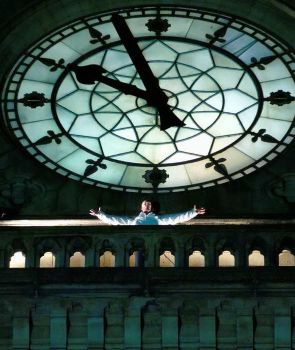
Thankfully, a few minutes later we realise that the driving factor in trying to get Jesus off stage as quickly as possible is to enable actor Darren Morfitt time to dash up the clock tower of Manchester Town Hall. Whilst the TV fails to really capture the moment, the testimonies of those who were there suggest that portraying Jesus's resurrection this way was particularly impressive.

This finale sums up Manchester Passion in many ways. On the plus side bold inventive and presenting the story in a new way to an audience largely unfamiliar with it, on their own turf. On the minus side some of the execution suffered from this being the kind of event it is impossible to properly rehearse. Given the size of the venture, the fact that so much went right is an achievement in itself, and means that it will be remembered for what it was, rather than for the passion play where the resurrection didn't happen because Jesus was only halfway up the clock tower.

Anyone wanting to see a clip from Manchester Passion can watch Darren Morfitt as Jesus singing "Love Can Tear us Apart" at You Tube

1This estimate would seem to be quite a way off. Amongst others, Ekklesia claim that it was only 8,000, and others sources such as the Church Times lists it as only 7000. That said neither those publications, or any of those which cite similar figures cite their sources. And having stood in a larger crowd than that on numerous occasions I would expect the figure to be far higher. Sadly the Manchester Passion representative I spoke to said that because the event was free they did not know the attendance.
2 Kreitzer L.J., The New Testament in Fiction and Film: On Reversing the Hermeneutical Flow (Biblical Seminar, No 17). Sheffield Academic Press (1993)